
Cosmetic packaging is one of the categories where a cheap mistake becomes visible quickly. A jar that looks clean in a supplier photo can still leak, scratch, crack at the thread, or fail when a buyer adds a label. For small beauty brands and wholesale buyers, the first order should prove the packaging system: bottle body, cap, inner plug, dropper, carton, and label space. The unit price matters, but closure fit matters more.
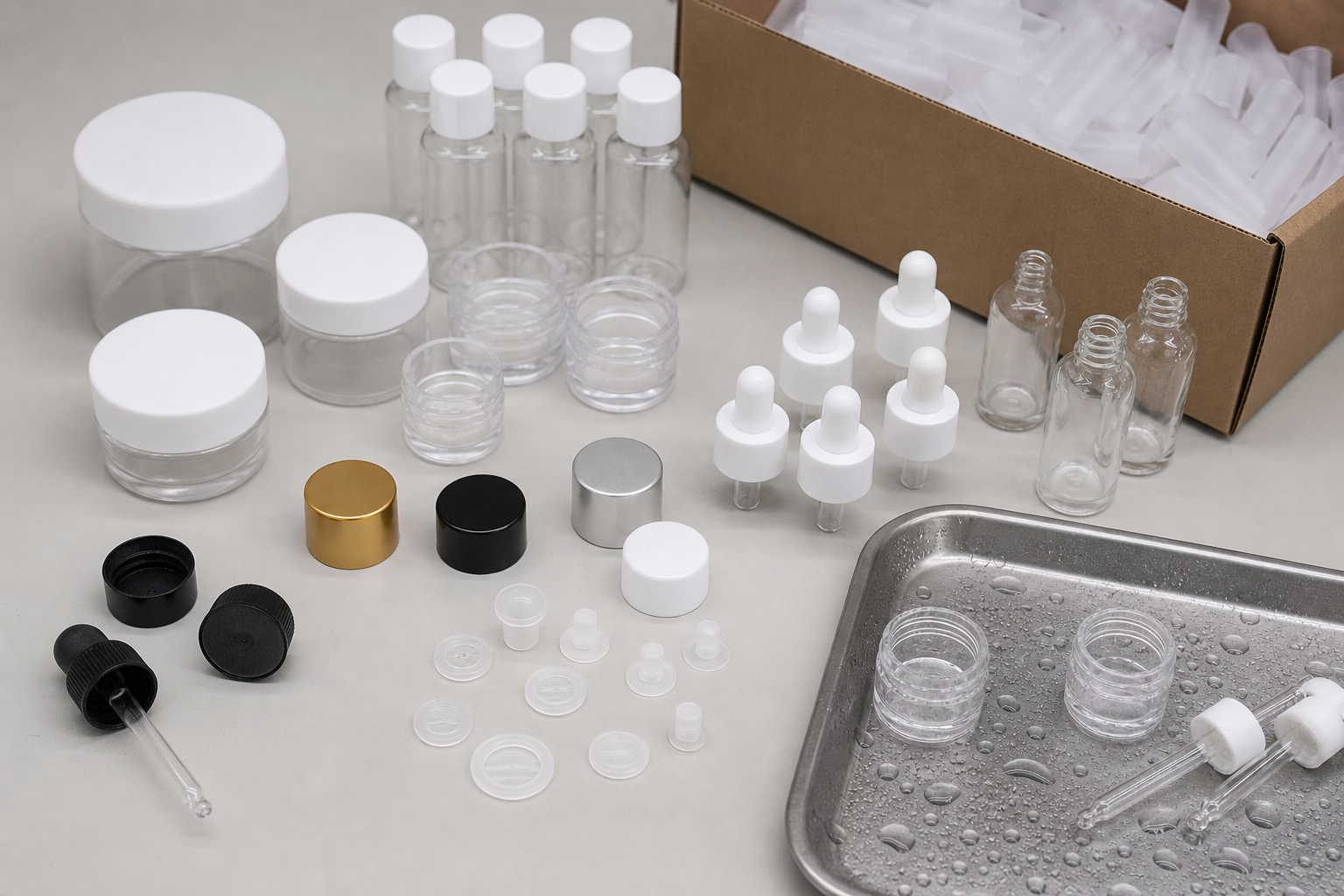
Source cosmetic packaging with inspection in mind
Use AwwwBuy to search bottles, jars, caps, plugs, and packaging components, then test fit and leakage before committing to printed packaging.
Related AwwwBuy product searches
Why packaging needs its own QC process
Packaging is not only a container. It protects the product, carries the brand, and affects customer trust before the formula is even used. For wholesale buyers, the hard part is that several factories may be involved: one for bottles, one for caps, one for droppers, one for labels, and one for final cartons. If the pieces are not checked together, the buyer may only discover the mismatch after labels are printed.
AwwwBuy backend demand signals show packaging and private-label components as a supporting beauty wholesale wedge. This is a useful cluster because packaging often sits next to nail tools, beauty accessories, and small salon consumables in the same sourcing basket.
Specs to confirm before ordering
| Spec | What to confirm | Why it matters |
| Capacity | Ask for brimful capacity and recommended fill volume. | A 30 ml bottle may not safely hold 30 ml after plug and cap are added. |
| Material | Confirm PET, PP, PE, glass, acrylic, or mixed material. | Material affects clarity, weight, chemical resistance, and shipping risk. |
| Neck finish | Check thread size and match with cap or dropper. | Small mismatch causes leakage or loose closure. |
| Inner plug | Confirm plug diameter, material, and whether it has a hole. | Plugs control dispensing and leak behavior. |
| Cap torque | Test how much tightening is needed to seal. | Over-tightening can crack caps or deform threads. |
| Label area | Measure flat label space before printing. | Curved bottles can wrinkle labels if the design area is too wide. |
Simple leak checks for first orders
Before scaling, fill samples with water or a similar test liquid, close them, and place them sideways on tissue for several hours. Then turn them upside down and repeat. For droppers, squeeze and release the bulb several times to check whether the pipette seats correctly. For jars, test whether the inner liner or plug moves after repeated opening.
- Test at least three samples from each supplier batch.
- Check the cap thread after opening and closing ten times.
- Leave filled samples in a warm room and inspect for seepage.
- Place bottles in a small carton and shake gently to simulate transit.
- Photograph any leakage pattern so the supplier can correct the exact part.
MOQ and private-label strategy
Packaging suppliers often offer lower MOQ for plain stock bottles and higher MOQ for custom color, mold, or printing. The smart first step is to buy plain packaging, confirm fit and leakage, then move to label or color customization. If the brand is still testing product-market fit, use label stickers instead of printed bottles. It keeps inventory flexible and reduces the risk of being stuck with printed packaging for a weak SKU.
Shipping and carton notes
Glass and rigid acrylic need stronger carton protection than flexible plastic bottles. Droppers should be packed to protect both the cap and pipette. If the order includes jars, caps, and inner plugs from different suppliers, consolidate carefully and label each component bag clearly. A mixed carton with unidentified caps becomes slow and expensive to inspect later.
How AwwwBuy supports the sourcing path
AwwwBuy can help buyers search for packaging components by product name, compare multiple supplier images, and combine bottles or jars with other beauty wholesale goods. The key is to use the first order as a test of component fit, not as a full private-label launch. Once the plain packaging passes QC, the buyer can add labels, cartons, and branded inserts with less risk.
FAQ
Should I order printed cosmetic bottles first?
Usually no. Test plain bottles and caps first. Add printing after the closure, leak test, and label area are confirmed.
What is the difference between brimful capacity and fill volume?
Brimful capacity is the maximum volume to the top. Fill volume leaves room for plugs, caps, and safe handling. Buyers should confirm both.
Can one supplier provide bottles, caps, and labels?
Sometimes, but still inspect the system. A supplier may source caps or labels from another factory, so fit and print proof checks remain important.
Check the packaging system before printing
Search cosmetic bottles, jars, caps, and droppers on AwwwBuy, then validate fit, leakage, and label area before scaling.